Who is who at Snell Foundation
Board of Directors
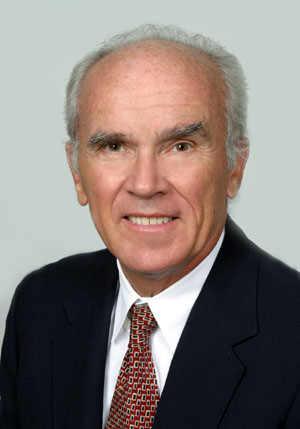
Daniel J. Thomas, M.D., M.P.H.
President – Dr. Thomas has brought to the Snell board since 1985, the rare ingredients of business, scholarship, scientific and medical credentials, research, teaching and writing in the field of head, neck and spine injury. He is a physician board certified in preventive medicine (Aerospace Medicine) and a consultant in bioengineering. He was a Naval Flight surgeon (1964-1968) with the U.S. Marines, founded the bioengineering department of the US Army Aeromedical Research Laboratory, served as a liaison officer for aeromedical research between the Army and Navy during the Vietnam war, and on several panels of the Advisory group for Aerospace Medical Research and Development (AGARD) of NATO. He helped found the Naval Biodynamics Laboratory, New Orleans, LA serving as Deputy Scientific Director and Chief of the Human Research Division (1969-1984).
His corporate career from 1984-2000 includes Medical Director of Celanese’s Specialty Operations, Hoechst Celanese, and V.P. Global Medical Director of Hoechst Marion Roussel and Aventis Pharmaceutical Corporation through a sequence of mergers and acquisitions.
Dr. Thomas received his undergraduate Physics education at the Massachusetts Institute of Technology, his medical education at Jefferson Medical School, Philadelphia, PA; U.S. Naval School of Aviation Medicine, and Master of Public Health at the Harvard School of Public Health. Dr. Thomas’ field of expertise is in occupational medicine, head, neck and spinal trauma and he is the author and collaborator of more than 50 published papers in the scientific area and contributing editor of two books on impact injury of the head and spine.
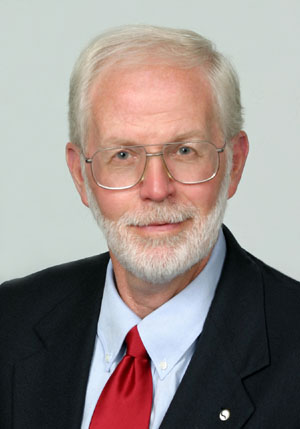
William H. Muzzy III
Treasurer - Since 1967, Mr. Muzzy has conducted extensive research into the forces governing the motions of occupants under crash conditions. During this time he has conducted dynamic testing using human volunteers, cadavers, primates and anthropomorphic test devices (dummies) with a variety of seats and seat belts. His achievements include conducting the first air bag tests series with human volunteers in 1969 and conducting a feasibility study for equipping a military attack helicopter with a small air bag to protect the gunner's head from impacting the sighting device in 1987. He has designed, built and operated a number of "man-rated" test facilities in conjunction with his research. During his employment with Dynalectron Corporation from 1967 through 1970, he supervised the operation of three man-rated impact test facilities (two horizontal accelerators and one vertical accelerator) for the US Air Force in New Mexico where over 3000 impact acceleration tests were run with human volunteers.
From 1971 through 1990 he was employed as Chief Engineer for a US Navy research laboratory located at NASA’s Michoud Assembly Facility in eastern New Orleans studying the effects of impact acceleration and vibration on humans. Over his twenty year career with the Naval Biodynamics Laboratory he designed, built and man-rated a vertical acceleration facility, a ship motion simulator and a rotational chair for studying the motion awareness effects.
Throughout his research career he has conducted over 5500 impact tests with human volunteers and numerous other experiments on the vibration and ship motion facilities. Within the crash safety field he is nationally recognized as an expert in: occupant restraint systems; airbags; child restraints; ejection seats; and crashworthy protection systems.
Mr. Muzzy has written over 55 technical research papers on the effects of impact acceleration and vibration on the human body. In 1996 a patent on automotive seat design was issued to him.
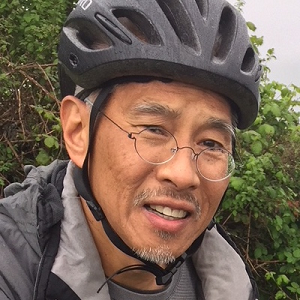
Randal P. Ching, Ph.D.
Vice-President - Dr. Randy Ching is the former Director of the Applied Biomechanics Laboratory and professor emeritus of Mechanical Engineering at the University of Washington (with an adjunct appointment to the Department of Orthopaedics & Sports Medicine). His research focus has been the biomechanics of the human musculoskeletal system including injury mechanics and prevention strategies, as well as the testing/evaluation of medical implants and surgical procedures.
Dr. Ching is currently the Chief Scientific Officer for PreActive Technologies, Inc., which is developing a physiological means to prevent mild traumatic brain injuries (concussions). He continues to be actively involved in the performance evaluation of both helmets and wearable head-impact sensors (dosimetry). In addition to serving on the Board of Directors of the Snell Foundation, he also is a member of the Engineering Subcommittee of the NFL's Head, Neck, and Spine Committee.
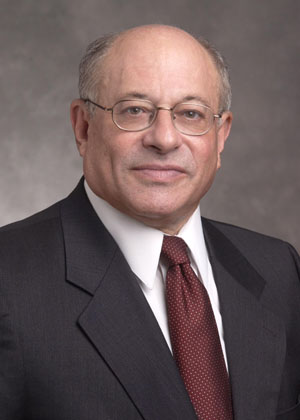
Paul H. Appel, Esq.
Counsel - Mr. Appel is advisor to numerous public, private and not-for-profit corporations and other businesses and real estate organizations. He has developed and established effective procedures for litigation anticipation and avoidance. Mr. Appel is a recognized advocate in federal and state tribunals.
He received his bachelor’s degree from Lafayette College and his J.D. from Columbia Law School. He is a member of the New York Bar, the New Jersey Bar and various United States District Courts and Courts of Appeal.
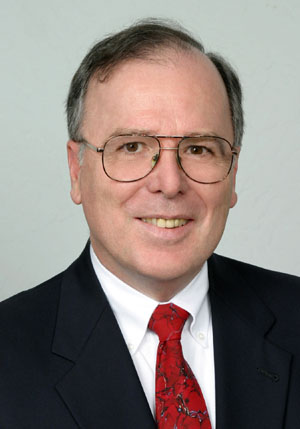
Edward B. Becker
Secretary - Prior to joining Snell in 1989, Mr. Becker worked for the Naval Biodynamics Laboratory in New Orleans studying human response to crash impact acceleration. Mr. Becker holds Bachelor's and Master's degrees in Mechanical Engineering from the Massachusetts Institute of Technology. He oversees the operation of all the Foundation's helmet certification programs.
Members Emeritus
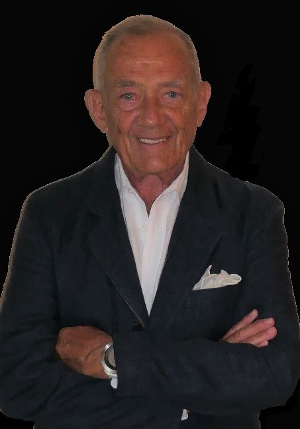
Thomas A. Gennarelli, M.D., MA, FACS, FAANS
Tom attended Northwestern University before graduating cum laude from Loyola Stritch Medical School in 1968. He interned in surgery at Rush University and then began a long vagabond that took him to Harvard for a neurology fellowship before serving as a commissioned officer in the U. S Public Health Service. It was during this time when he was stationed at NIH that his interest in neurotrauma began. Devoted to better understand how mechanical energy disturbed the function of nervous tissue and brain physiology, he continued his NIH lab while undertaking a neurological surgery residency at Georgetown University. Hired to continue his brain injury laboratory and clinical research at the University of Pennsylvania, he climbed the academic ladder to Professor, while simultaneously teaching residents, running one of the first neurosurgical intensive care units and developing a neurosurgical practice that specialized in brain and pituitary tumors as well as neurotrauma care. Subsequently, he chaired the Departments of Neurosurgery at the Allegheny School of the Health Sciences (formerly Hahnemann University and Medical College of Pennsylvania, now Drexel University School of Medicine) and at the Medical College of Wisconsin (MCW), from which he retired in 2011. He continues to be emeritus Professor of Neurological Surgery at MCW and Clinical Professor of Neurological Surgery at George Washington School of Medicine.
His major contributions were
- to define the spectrum of concussion,
- to categorize traumatic brain injuries into focal and diffuse types, each having different biomechanical, clinical and treatment implications,
- to refine tools (such as the Abbreviated Injury Scale and the Revised Trauma Score) used for trauma characterization,
- to prove the importance of angular head motions in the cause of concussion, diffuse brain injury and acute subdural hematoma with resulting implications for sports and vehicular injuries and helmet performance,
- to determine that the axon is one principal locus of nervous tissue injury, and
- to define and characterize the biomechanical causation, clinical course and treatment of a disease he named Diffuse Axonal Injury (DAI). The practical implications of his finding that side head motions were very injurious led to the establishment of federal standards for side-impact air bags.
His work in injury and neurotrauma have accorded him numerous honors, visiting professorships, founding memberships and leadership positions in various scientific organizations and more than 30,000 citations to his more than 500 scientific publications.
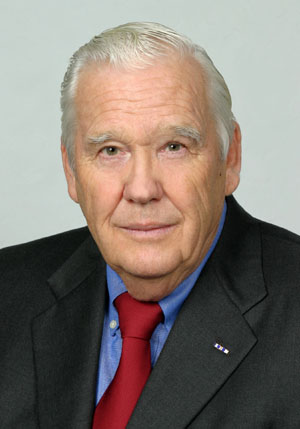
Richard G. Snyder, Ph.D.
Dr. Snyder is an internationally known research scientist with 48 years of expertise in human impact tolerances and trauma mechanisms, biomechanics, forensic anthropology and anthropometry, crash protection, and transportation safety. He served as Director of the NASA Center of Excellence in Man Systems Research; Head of the Biomedical Department, Research Scientist, and Professor of Anthropology at the University of Michigan; Manager of Biomechanics at the Ford Motor Company; Chief of Physical Anthropology and intermittent Chief of Protection and Survival Laboratories, Civil Aeromedical Institute, Federal Aviation Agency; Associate Professor of Systems Engineering, University of Arizona; and on faculties of Michigan State, University of Chicago, and University of Oklahoma.
After military service as a decorated Air Force fighter pilot in Korea, he received his B.A., M.A., and Ph.D. (physical anthropology/zoology) degrees at the University of Arizona, with additional graduate study at Cornell University. He is Board certified in forensic anthropology (D.ABFA); a Fellow in Aerospace Medicine (F.AsMA).
Author of over 400 scientific publications and presentations, including the chapter on "Impact" in the NASA BioAstronaut Data Book, Dr. Snyder has served with such organizations as the Aerospace Medical Panel (BioDynamics; expert consultant), AGARD-NATA, the Executive Council of CHABA, the Committee on Federal Trauma Research of the National Academy of Sciences - National Research Council, the Naval Research Advisory Committee, and Centers for Disease Control Impact Trauma Advisory Committee.
His research has been internationally recognized by awards from the National Safety Council, Society of Automotive Engineers, Flight Safety Foundation, Aerospace Medical Association, and American Academy of Forensic Sciences. He received the John Paul Stapp Award in Aerospace Biomechanics, was inducted into the Safety and Health Hall of Fame International, and the Arizona Aviation Hall of Fame, and in 2004 honored by named professorship, Richard G. Snyder Distinguished University Professor of Industrial and Operations Engineering, University of Michigan.
Dr. Snyder retired from Snell's Board of Directors in 2010, but continues to be a respected contributor to the Foundation's efforts.